
The Power of Dynamic Material Analysis
- Home
- The Power of Dynamic Material Analysis
Introduction to Dynamic Mechanical Analysis for Rubber Materials
Download the guide to understand how DMA helps rubber engineers measure viscoelastic behavior, identify thermal transitions, evaluate damping, and build test methods that reflect real service conditions.
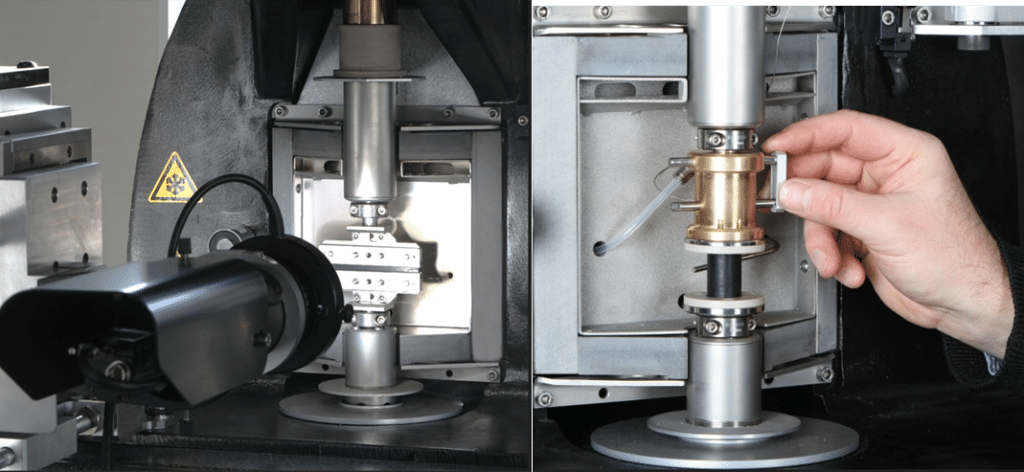
Why Rubber Engineers Need a Better View of Material Behavior
Rubber compounds do not perform in a static world. They flex, damp, heat up, recover, and change behavior with temperature, frequency, and strain. Dynamic Mechanical Analysis (DMA) gives engineers a sharper view of those changes, helping teams evaluate long-term performance with greater confidence.
Whether you are working on tire compounds, seals, antivibration parts, or other elastomer applications, DMA helps connect what happens in the lab to what happens in service. That makes it a useful tool for formulation work, quality control, failure analysis, and material selection.
This white paper gives you a practical introduction to DMA, with a focus on the measurements, test types, and interpretation methods that matter most when working with rubber and other viscoelastic materials.
Understanding the Core DMA Outputs
Learn what stiffness, storage modulus, loss modulus, phase angle, and tan delta reveal about how a material stores and dissipates energy.
Build Better Test Methods
See how frequency sweeps, strain sweeps, and temperature ramps are used to characterize unknown materials, define linear and non-linear behavior, and study effects such as Payne and Mullins.
Connect Test Data to Real Performance
Understand how DMA supports glass transition analysis, damping evaluation, master curve construction, and the prediction of behavior across wider operating conditions.
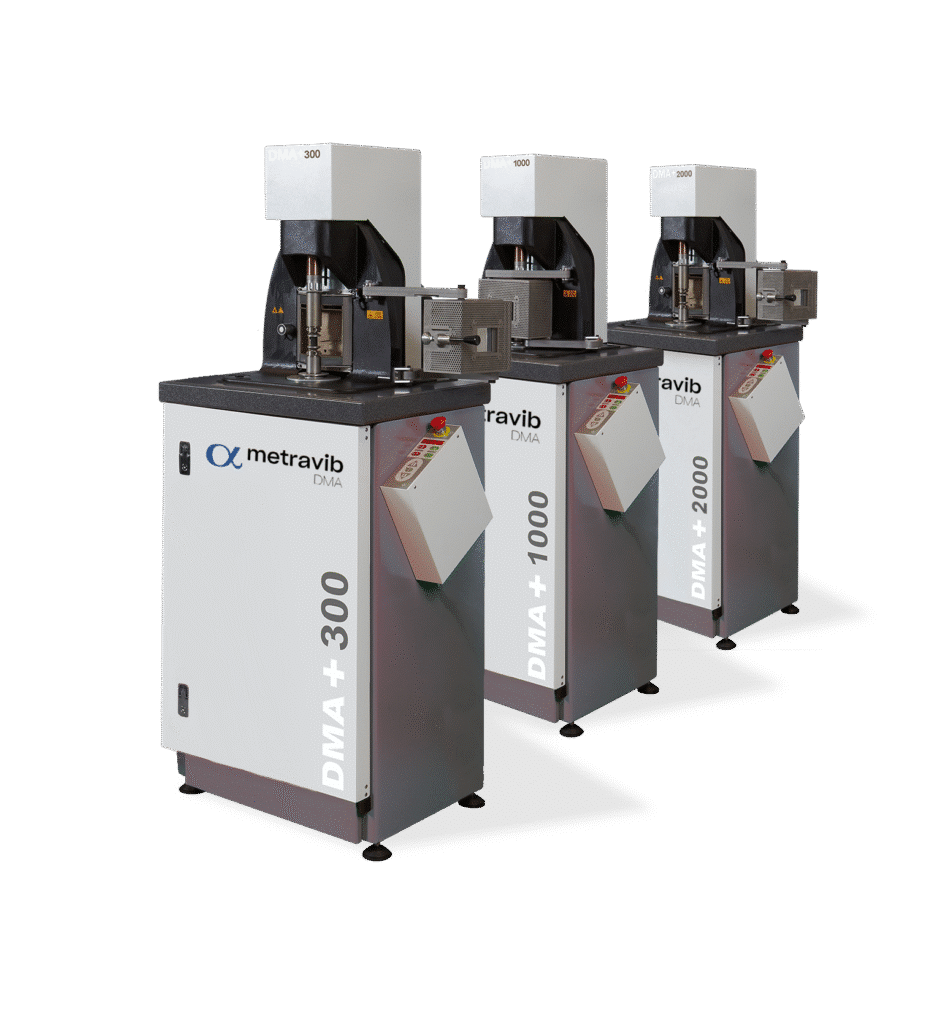
About the Metravib DMA+ Series
The Metravib DMA+ series is designed for accurate analysis of viscoelastic properties across a wide range of advanced materials, including elastomers, polymers, composites, films, gels, adhesives, and packaging materials.
Its design supports deeper, more reliable characterization through features such as a one-piece high-rigidity frame, broad measurable stiffness capability, multi-frequency testing, and fixtures for tension, compression, shear, and bending applications.
Key capabilities include:
- Determination of glass and secondary transitions
- Precise measurement of viscoelastic properties
- Analysis across temperature, frequency, force, and strain conditions
- Support for polymer and elastomer characterization, including follow-up of material behavior across changing conditions
About the Guide
Created to help engineers and technical teams get more from DMA testing, this guide explains the fundamentals of the technique and walks through the most common test protocols used to characterize material behavior.
Inside, you will find a practical overview of DMA and its scope of application, guidance for improving analysis quality, tips relevant to Metravib instruments, and useful direction for integrating DMA into research, development, and testing workflows.
Download Intro to Dynamic Mechanical Analysis
Get the full guide to Dynamic Mechanical Analysis and learn how to apply DMA more effectively in rubber testing, from thermal transitions and damping behavior to frequency response, strain effects, and master curve development.
Fill in the form below to access your download. You will receive a link in the email you supply.