
Driving Out Variation Starts With Better Raw Material Data
- Home
- Driving Out Variation Starts With Better Raw Material Data
Driving Out Variation Starts With Better Raw Material Data
Raw elastomers and fillers can vary more than most manufacturers realize. Small shifts in molecular weight distribution, branching, filler networking, or thermal stability can quietly alter processing behavior, cure performance, and final part quality.

Why This Matters
Most plants still measure raw materials after they leave the mixer. At that point, problems have already entered production. The Ebook explains why earlier detection matters and how methods like frequency sweeps, strain sweeps, crossover testing, and LAOS expose critical differences long before you mix, extrude, or mold.
You’ll learn how to spot:
- Shear-rate dependent viscosity shifts that impact mixing, molding, and extrusion
- Temperature-dependent viscosity differences that affect flow and cure behavior
- Molecular weight distribution changes that cause unpredictable processing
- Branching variations that drive up mixing energy
- Filler-network behavior that affects heat buildup and reinforcement
- Early signs of degradation or instability that impact storage and shelf life
Inside the Ebook
Here’s what the guide covers, using real data and examples from nitrile, EPDM, SBR, natural rubber, and silicone characterization.
- Frequency Sweeps to Characterize Raw Elastomers
Learn how to move beyond a single Mooney point and evaluate full shear-rate behavior, molecular weight distribution, ACN content differences, and processing expectations. - High Strain Sweeps for Molecular Architecture
See how high-strain testing reveals long-chain branching, entanglements, and gel content—key reasons why two “identical” raw elastomers behave very differently in mixing and extrusion. - Crossover Frequency (Gel Point) Testing
Understand how G’ = G” crossover points help define accept/reject criteria across suppliers andidentify materials likely to cause mixing inconsistencies or extrusion surface defects. - FT-Rheology via LAOS
An advanced, fast way to quantify long-chain branching and polymer topologyinformation that directly impacts processability, energy usage, and product uniformity. - Gel Content Identification
See how LAOS-based tan-delta harmonics can quickly differentiate good vs. bad EPDM batches with minimal sample prep and test times under 10 minutes. - Filler Network and Non-Rubber Material Behavior
From Payne effect analysis to strain jump experiments,you’ll learn how fillers, coupling agents, and functionalized polymers affect heat buildup, hysteresis, and reinforcement.
Who This Guide Helps
Rubber Manufacturers
- Reduce variation entering your process
- Improve mixing stability and extrusion quality
- Define specifications suppliers can realistically meet
- Detect issues long before they become scrap or defects
Raw Material Suppliers
- Characterize material consistency with meaningful metrics
- Provide customers more than single-point Mooney values
- Troubleshoot and improve production variability
- Build stronger customer trust with deeper data
What You’ll Be Able to Do
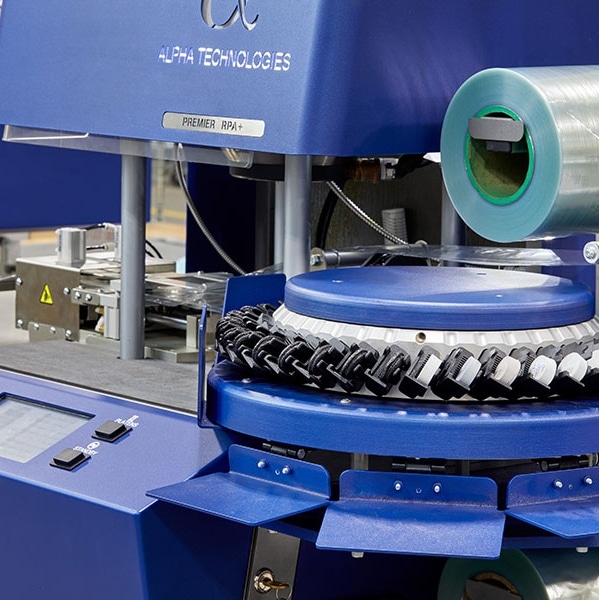
After reading the ebook, you’ll know how to:- Identifyproblematic batches of elastomers before production • Replace outdated acceptance criteria with data-backed specifications • Use Premier RPA capabilities to build a modern QC workflow • Translate rheological signatures into real production outcomes • Communicate clearer expectations to your suppliers or customers
Need Help Applying These Methods?
Alpha’s global applications team works with manufacturers and raw material suppliers to diagnose variability and establish testing procedures. If you want help designing a test plan or evaluating your raw materials, reach out we’re here to support your process.
Download the Ebook
Get “Driving Out Variation: 6 Test Methods to Get Rubber Raw Materials Under Control” and start building a more stable, predictable, and profitable process.