
One-Test Polypropylene Characterization
- Home
- One-Test Polypropylene Characterization
Complete Polypropylene Material Characterization from One Test
Download the white paper to see how the Premier ESR helps measure viscoelastic behavior and flow performance from melt to solid state, with minimal sample preparation and no need for multiple instruments.
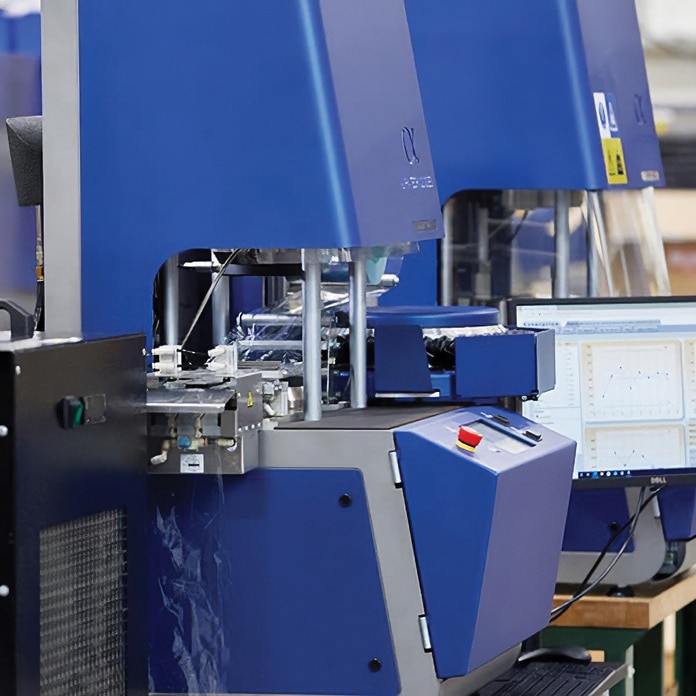
Why Polypropylene Needs a More Complete Test Approach
Polypropylene is used across packaging, automotive, and technical products, but getting a full picture of its behavior is not simple. Conventional tools can capture part of the story, yet they often leave engineers stitching together data from multiple instruments just to understand processability and end-use performance.
That becomes a problem when you need both flow data and viscoelastic insight. Shear viscosity alone does not tell you enough about how PP behaves across the full processing window. Engineers also need to understand storage modulus, loss modulus, and damping behavior if they want a clearer view of how the material will perform.
What You Will Learn in This White Paper
This paper shows how a single-test approach can deliver a more complete polypropylene characterization workflow, without the usual mess of extra prep steps and disconnected datasets.
See the limits of conventional PP testing
Learn why capillary, rotational, and scientific rheometers can leave important gaps when you need a fuller understanding of molecular-level material behavior.
Understand how the Premier ESR closes those gaps
See how oscillatory shear rheology, combined with a sealed cavity design, helps eliminate edge fracture and underfilling effects while allowing direct measurement of PP pellets with only 4 to 5 grams of sample.
Extend data into processing-relevant conditions
Understand how time-temperature superposition extends ESR data into higher shear-rate and frequency ranges relevant to processes such as extrusion and injection molding.
Compare viscoelastic data with viscosity performance
See how ESR data can be used to assess G′, G″, and tan δ, while also producing viscosity curves that align closely with capillary rheometer measurements.
One Instrument. More Complete Polypropylene Insight.
The Premier ESR is designed to give research engineers and scientists a broader view of polypropylene behavior from a single test. Its sealed cavity design supports direct pellet measurement, reduces sample-preparation burden, and helps avoid common issues that can interfere with data quality in other methods.
In this study, the ESR was used to generate viscoelastic data that could be extended through time-temperature superposition into processing-relevant ranges of approximately 1000 rad/s, or 1000 s⁻¹ based on the Cox-Merz relationship. The resulting viscosity curve aligned closely with capillary rheometer data, giving engineers a reliable path to both viscoelastic and flow characterization without requiring a separate capillary test.
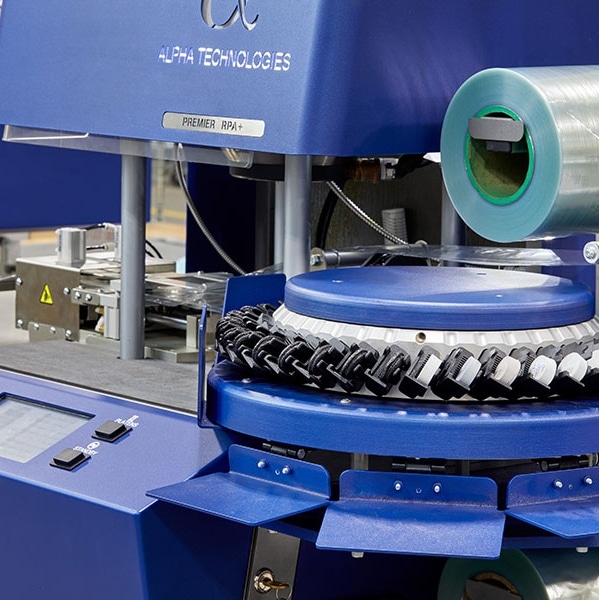
Download the Polypropylene Characterization White Paper
Get the white paper to see how Alpha Technologies uses the Premier ESR to characterize polypropylene more completely, from viscoelastic properties to flow behavior, with less sample preparation and fewer testing handoffs.
Fill out the form to access the download.
Prepared from a special report originally published in Rubber News (March 31, 2025) and reproduced with permission.