Your Compound Passed Tensile. Why Did It Still Fail?
Parker's Engineers Found the Answer in RPA results
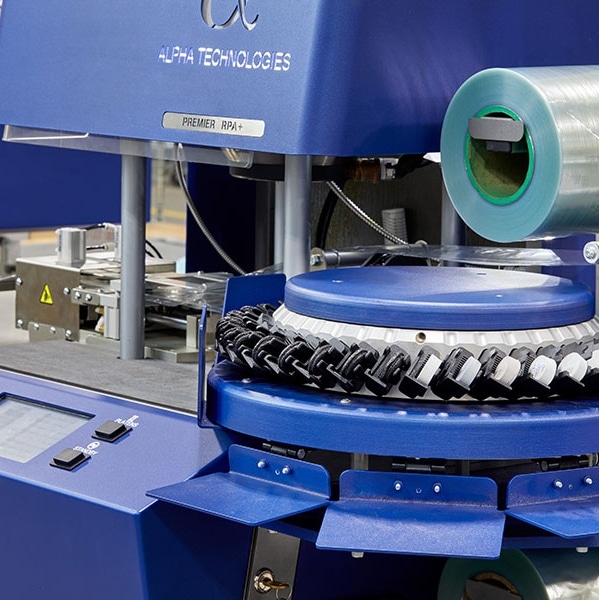
Tensile results arrive too late to explain what went wrong. Parker Hannifin’s Materials Engineering team used the Premier RPA to evaluate filler dispersion at the mixing stage, before cure could bury the evidence.
Tensile strength is the industry standard. But it only tells you what happened after cure. It confirms pass or fail. It doesn’t explain why.
When a batch drifts out of spec, you’re left guessing. Was it mixing? Raw material variation? Something that happened during cure? Tensile results alone won’t tell you.
That gap costs time. It costs scrap. It costs money. And it keeps showing up until you find the real answer.
What Parker did differently
Parker’s team didn’t wait for cured parts to reveal problems. They tested uncured compounds using RPA strain sweeps to measure filler network development at the mixing stage.
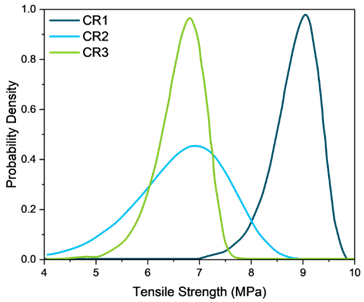
Then they ran tensile strength distributions on cured samples to confirm macro-scale dispersion.
The logic: Use RPA to predict. Use tensile to confirm.
Between these two methods, you get a complete picture of dispersion and mixing quality.
This approach separated mixing effects from cure effects and gave the team confidence in root cause before production.
Tensile supported the conclusion. RPA delivered the explanation.
What You’ll Learn in the Technical Reprint
1. How to measure mixing quality before cure
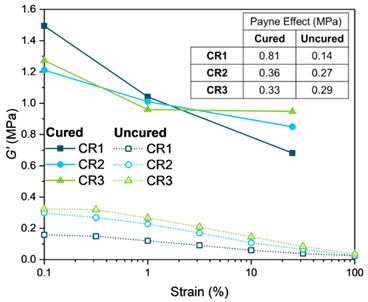
RPA strain sweeps quantify filler network integrity through the Payne Effect. This gives you a mixing-sensitive fingerprint independent of cure behavior.
2. How to separate mixing effects from cure
By comparing uncured and cured Payne Effect values, the study shows which dispersion characteristics come from mixing and which develop during cure.
3. Why this changes how you troubleshoot
RPA strain sweeps revealed which mixing approach produced the best dispersion before cure without relying on cure-dependent properties.
The Bottom Line
Testing compound quality before production saves time, prevents scrap, and protects your bottom line. Waiting for tensile on cured parts means the problem already happened.
Parker’s approach combines early warning from RPA with final confirmation from tensile. Together, these two tests tell you everything you need to know about your compound’s dispersion and mixing quality.
If Parker’s engineers use this method to qualify their compounds, it’s worth asking: why aren’t you?
About the study
This reprint focuses on a sulfur-cured chloroprene hose cover compound with high filler loading. Three mixing strategies (CR1, CR2, CR3) were evaluated using RPA strain sweeps and tensile strength distributions.