

Introduction
Dynamic Mechanical Analysis (DMA) is a well-established technique for characterizing the viscoelastic (mechanical) properties of materials and is increasingly used in biomedical applications. Chitosan is one of the most widely used polymers in the biomedical field, including tissue engineering and regenerative medicine, due to its structural and functional similarity to components found in living tissues.
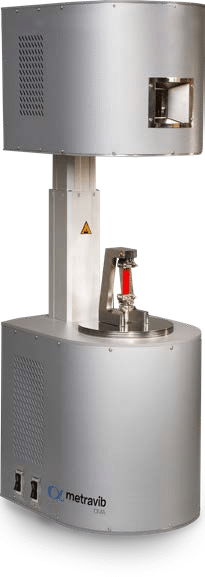
In biomedical applications, chitosan polymer can be exposed to a wide range of relative humidity levels. These conditions may vary from moderate relative humidity in applications such as wound dressings to near-maximum water uptake in implantable conditions, such as internal sutures.
Considering the importance of understanding the effect of relative humidity on chitosan polymer, this study was performed to characterize and analyze its mechanical behavior under several relative humidity levels. Such analysis is particularly relevant, as mechanical performance plays a critical role in the functionality of biomaterials.
FREE DOWNLOAD
Introduction to Dynamic Mechanical Analysis for Rubber Materials
Materials & Methods
A thin film of chitosan polymer was characterized using the Alpha Metravib DMA 25/50 in shear mode at several relative humidity levels. A dedicated hygrometric module was used to generate and control humidity within the DMA chamber. This module also allows humidity control at different temperatures required for the measurements.
The schematic principle of shear mode is shown in Figure 2. The characterized film was 0.075mm thick and 18mm wide.
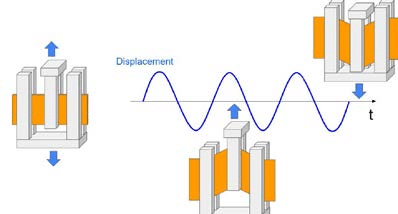
The shear film specimen holder used in this study was specifically designed for thin film characterization. The test parameters are summarized in Table 1.
Table 1. Test Parameters
| Dynamic | 5e−6m |
|---|---|
| Frequency | 10 Hz |
| Temperature | Room temperature |
| DMA | DMA 25/50 |
| Test mode | Shear Film |
| Relative humidity | 5–90% |
Results
The viscoelastic properties of the chitosan polymer, expressed in terms of shear storage modulus (G′) and tan δ, are presented in Figure 3 as a function of relative humidity.
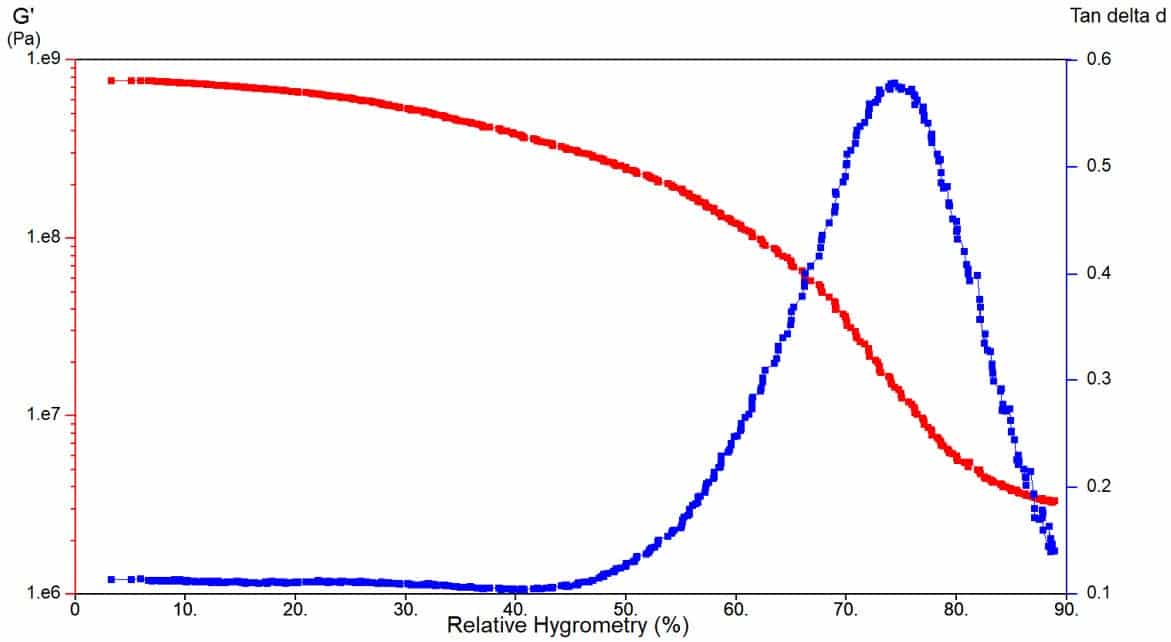
A decrease in shear storage modulus was observed with increasing relative humidity. In addition, chitosan polymer exhibited a transition-type behavior under humid conditions. The reduction in storage modulus by nearly two orders of magnitude, along with the observed transition behavior at higher relative humidity levels, highlights the importance of investigating the mechanical properties of chitosan polymer under varying humidity conditions.
FREE DOWNLOAD
Introduction to Dynamic Mechanical Analysis for Rubber Materials
Conclusions
The viscoelastic properties of chitosan polymer were characterized using DMA 25/50 combined with a dedicated module for humidity generation within the DMA chamber.
At higher relative humidity levels, a significant decrease in shear storage modulus and the presence of a transition-type behavior in tan δ demonstrate the importance of characterizing chitosan and other polymers under different humidity conditions relevant to their intended applications. To download the full PDF, click here.
KEY TAKEAWAY
DMA measurements show that increasing relative humidity significantly alters the viscoelastic behavior of chitosan, highlighting the need to evaluate biomaterials under realistic humidity conditions.
LEARN MORE ABOUT DMA
Introduction to Dynamic Mechanical Analysis for Rubber Materials
How rubber engineers evaluate real world material behavior
Inside the guide: guidance for improving analysis quality and useful direction for integrating DMA into research, development, and testing workflows.